

Table of Contents
ToggleIntroduction
SFM Compile is a term commonly associated with compiling projects created in Source Filmmaker (SFM). For creators who enjoy animation, filmmaking, gaming visuals, and digital storytelling, understanding the compilation process can make a major difference in the quality and usability of their final work. SFM provides a powerful environment for creating animated scenes, but compiling and preparing those scenes properly is an important part of turning a project into a finished video.
What Is SFM Compile?
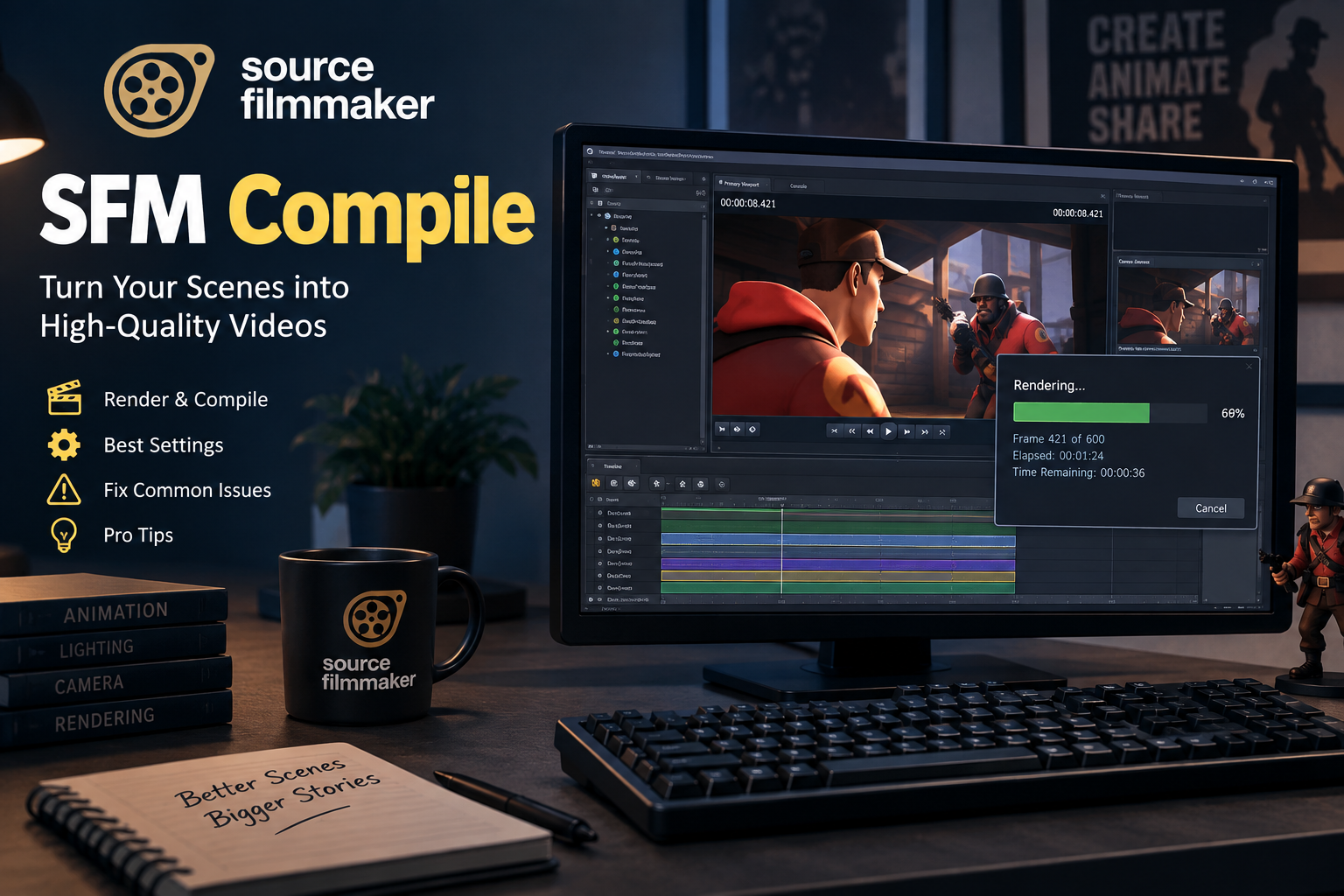
SFM Compile generally refers to the process of preparing and rendering content created in Source Filmmaker. Source Filmmaker is a tool designed for creating movies and animated sequences using assets from Valve’s Source engine. Users can build scenes, position characters, add lighting, create camera movements, and animate objects.
Once the creative work is complete, the project needs to be compiled or rendered into a usable video format. This process converts the timeline and scene information into frames or a finished video that can be edited, shared, or published.
Why Is SFM Compile Important?
Compiling is an essential step because a project inside an editing environment is not automatically a finished video. The timeline contains instructions about what should appear on screen, while the rendering process produces the actual visual output.
A proper compile process can help creators maintain:
- Better image quality
- Smooth animation
- Accurate lighting
- Proper camera movement
- Consistent frame rates
- High-quality audio
- Reliable video playback
For creators working on detailed animation projects, these factors can strongly influence the final result.
How SFM Projects Are Prepared
Before compiling an SFM project, creators usually review the entire scene. This includes checking character animations, props, backgrounds, lighting, camera angles, and sound.
It is also important to preview the animation before starting the final render. A small problem with a character’s movement or camera position can become frustrating if it is discovered only after a long rendering process.
A useful preparation checklist includes:
- Review the complete timeline.
- Check character and object animations.
- Verify camera movements.
- Adjust lighting and shadows.
- Confirm audio placement.
- Remove unnecessary elements.
- Select appropriate output settings.
- Render a short test before the final compilation.
SFM Compile and Video Quality
Video quality depends on several settings. Resolution is one of the most important factors because it determines how detailed the final video appears. Higher resolutions can provide sharper results but may also require more processing time and storage space.
Frame rate is another important consideration. Smooth animation requires consistent frame timing. If the project is intended for a particular platform, creators should consider the platform’s recommended resolution and frame-rate requirements.
Rendering quality also depends on lighting, textures, models, shadows, and other scene elements. Increasing every setting to the maximum is not always necessary. The best approach is to balance visual quality with rendering performance.
Common Problems During Compilation
Creators can sometimes encounter problems when preparing or rendering SFM projects. These may include missing assets, incorrect textures, rendering errors, audio synchronization problems, or unexpectedly long processing times.
One common issue is a missing model or texture. If an asset is unavailable, the final scene may not look the way it appeared during editing. Checking assets before the final render can help prevent this problem.
Another issue is performance. Complex scenes containing numerous models, particles, lights, and effects can take significantly longer to render. Breaking large projects into manageable sections can make the workflow easier.
Tips for Better SFM Results
A successful SFM project usually begins with good organization. Creators should keep their project files, assets, and exported videos organized. Saving different versions of a project can also be helpful because it allows creators to return to an earlier version if something goes wrong.
Lighting deserves special attention. Good lighting can make characters and environments look more realistic and visually appealing. Camera movement should also be intentional rather than unnecessarily complicated.
Testing is another valuable habit. Instead of immediately rendering a long animation, creators can render a short section first. This makes it easier to identify problems without wasting significant processing time.
The Creative Potential of SFM
One of the biggest strengths of Source Filmmaker is creative freedom. Users can create short films, comedy scenes, game-inspired animations, cinematic sequences, promotional videos, and experimental projects.
SFM Compile becomes the bridge between this creative process and the final presentation. Once a scene has been carefully created and rendered, it can become part of a larger video project or be shared with an audience.
The tool can therefore be useful not only for experienced animators but also for beginners who want to learn about animation, cinematography, storytelling, and digital production.
Future of SFM-Based Content
SFM continues to have a recognizable place in online animation communities. While newer animation and video tools are available, Source Filmmaker remains interesting because of its connection to game assets and its relatively flexible filmmaking environment.
Creators can continue improving their work by learning animation principles, camera composition, lighting, editing, and rendering techniques. These skills can also transfer to other creative software and professional production environments.
Conclusion
SFM Compile is an important part of turning a Source Filmmaker project into a finished visual product. From checking assets and animation to choosing suitable resolution and frame-rate settings, careful preparation can significantly improve the final result. By testing scenes, organizing projects, and balancing quality with performance, creators can produce smoother and more attractive animations.
Whether someone is creating a short comedy animation, cinematic scene, gaming video, or experimental project, understanding the compilation and rendering process can help transform an idea into a polished final video.
